
Cleaning vs. disinfecting vs. sanitizing: what facilities actually need
The three terms get used interchangeably, but they do different jobs, and in Canada the difference is partly a regulatory one. Here is what facilities need to know.
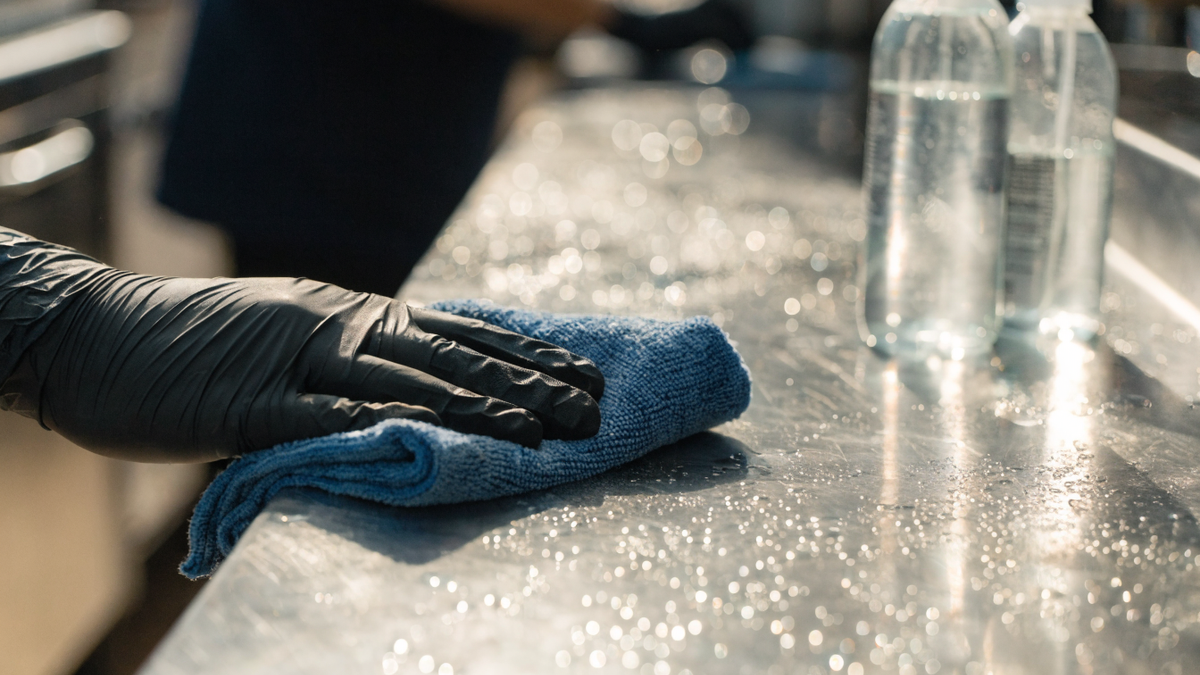
On a busy site, "clean," "sanitize," and "disinfect" often get used as if they mean the same thing. They do not. Each does a different job, and in Canada the difference between them is partly a regulatory one. Getting the language right is how you build a routine that actually works and stays on the right side of the rules.
The short version
Three jobs, three outcomes:
- Cleaning removes visible soil, dust, grease, and organic matter from a surface. On its own it does not claim to kill germs.
- Sanitizing reduces bacteria on a surface to a level considered safe by public-health standards.
- Disinfecting destroys or inactivates a broader range of microorganisms on hard, non-porous surfaces. It is the step that carries a regulated kill claim.
Why the difference is a compliance issue in Canada
In Canada, the moment a product claims to disinfect, it is regulated as a drug by Health Canada. A hard-surface disinfectant must be assessed before it can be sold and must carry a Drug Identification Number (DIN), supported by evidence that it performs the way the label says.
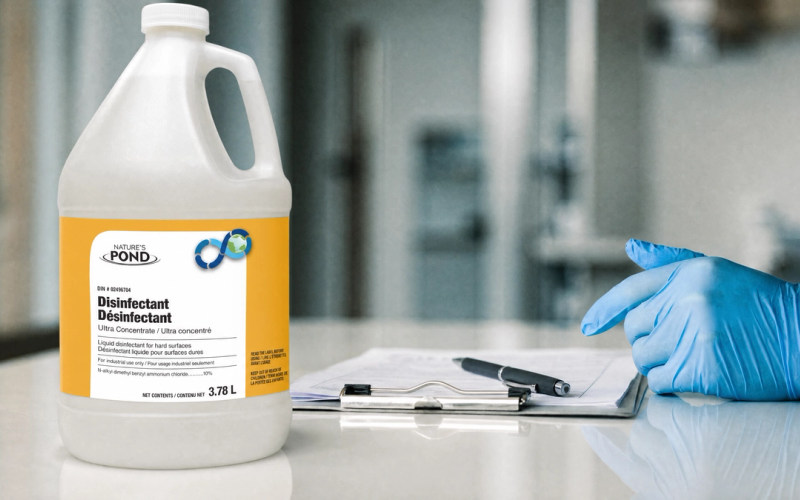
That is exactly why our two disinfecting products are DIN-registered. Our Liquid Disinfectant carries DIN 02496704, and our RTU-Q One-Step Disinfectant & Cleaner is separately DIN-registered. Our bio-based cleaners, by contrast, are sold as cleaners, because that is what they are.
Best practice: clean first, then disinfect
Disinfectants are designed to work on an already-clean surface. Soil and organic matter can physically shield microorganisms and reduce a disinfectant's effectiveness, so the sequence matters:
- Clean the surface to remove soil, grease, and debris.
- Apply the disinfectant and respect its full label contact time. The surface needs to stay visibly wet for the time stated on the label.
- Let it air dry, or wipe only after the contact time has elapsed.
What this means for your facility
You rarely need a disinfectant for every surface. A practical program pairs a DIN-registered disinfectant for high-touch points and clinical areas with low-odour, bio-based cleaners for everyday surfaces. That usually means fewer products, less confusion for staff, and a lower cost per clean.
Every product we sell ships with a Safety Data Sheet, and our disinfectant labels state their approved surfaces and contact times. If you want help mapping the right products to your sites, our team can build a program around your facility.
Not sure which surfaces need a registered disinfectant? Talk to our team and we will help you build a compliant, lower-cost routine.
Keep reading
Related articles
The real cost-per-use of cleaning concentrates: a procurement math guide
Sticker price is the wrong number. Here is how to calculate the true cost per use of a concentrate, and why it usually wins on both budget and waste.
How biotech cleaning works: beneficial bacteria and enzymes, explained
Bio-based cleaners do not just wipe soil away, they keep breaking it down. Here is how beneficial bacteria and enzymes actually clean, in plain language.
What a Health Canada DIN means for your disinfectant
A DIN is not a marketing badge, it is proof a disinfectant was assessed by Health Canada. Here is what it covers and how to check one.
Put this into practice
Explore the bio-based range trusted across Canadian facilities, or talk to our team about the right products for your space.